


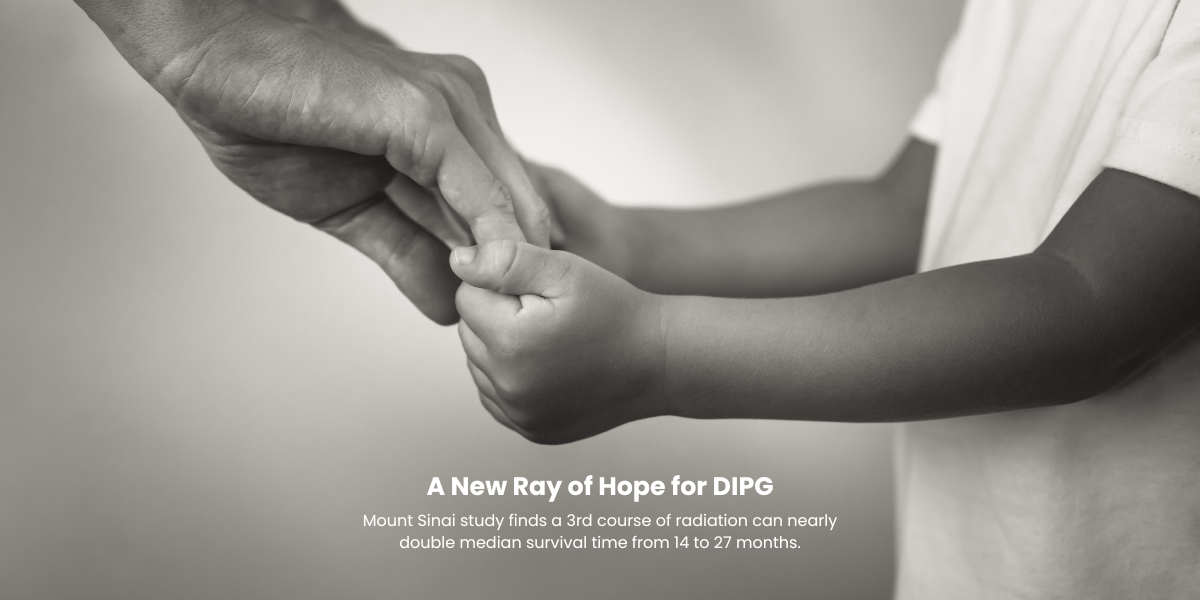
In a landmark finding for pediatric oncology, researchers at the Icahn School of Medicine at Mount Sinai have published the largest review to date on administering three distinct courses of radiation therapy to children with recurrent diffuse intrinsic pontine glioma (DIPG).
The study, published in Practical Radiation Oncology in August 2026, offers new hope for families facing a diagnosis that traditionally carries few, if any, effective secondary treatment options.
Understanding DIPG and the Limits of Current Treatment
DIPG is an exceptionally aggressive, fast-growing tumor located in the brainstem, the region controlling vital functions like breathing, heart rate, and movement. Primarily affecting children between the ages of 5 and 10, DIPG cannot be surgically removed due to its sensitive location.
Standard care relies heavily on radiation therapy to temporarily shrink the tumor and manage neurological symptoms. However, even with initial treatment, the median survival rate historically sits at just 12 to 14 months from diagnosis.
While a second round of radiation (reirradiation) has gained traction in recent years as the cancer progresses, doctors have hesitated to offer a third course due to fears of irreversible radiation damage to healthy brain tissue.
Key Findings: Doubling Survival and Improving Quality of Life
By combining Mount Sinai’s institutional experience with every previously documented case globally, investigators compiled data on 12 patients, representing the entire published worldwide experience of three-course reirradiation.
| Metric | Historical Standard | Three-Course Reirradiation Cohort |
| Median Overall Survival | 12–14 months from diagnosis | 27 months from diagnosis |
| Treatment Side Effects | High toxicity concerns | Managed without unacceptable side effects |
| Quality of Life | Rapid neurological decline | Meaningful symptom relief & functional improvements |
“Radiation therapy remains the only treatment consistently shown to help these children,” said senior author Stanislav Lazarev, MD, Associate Professor of Radiation Oncology at Icahn Mount Sinai. “Our study… suggests that, in carefully selected patients, a third course of radiation may offer additional symptom relief and valuable time.”
Why This Finding Matters
- Immediate Accessibility: Unlike experimental drugs that require lengthy trials or regulatory approvals, standard radiation equipment is already available in major hospitals worldwide.
- Quality of Life focus: Beyond extending time, the primary benefit observed was functional relief — helping children regain mobility and symptom control during disease recurrence.
- Foundation for Clinical Protocols: First author Lauren Jacobs, MD, noted that while not a cure, these findings give physicians the initial retrospective evidence required to counsel families and design formal prospective clinical trials.
Limitations and What Comes Next
The study authors emphasize caution: because DIPG is rare, the sample size remains small (n = 12), and the retrospective nature means patient selection bias could play a role in the high survival numbers.
To build on these results, the Mount Sinai team is planning a prospective clinical study to establish standard safety protocols and identify specific biomarkers or clinical factors that indicate which children are most likely to benefit from multi-course reirradiation.
***
At IronMatt, we believe every new discovery is a life preserved in the future. Thank you for standing with us, supporting families, and funding the science that makes tomorrow brighter.
IronMatt is a 100% model charity. Every dollar given goes directly to our dual mission of funding research and providing financial assistance to families fighting pediatric brain tumors.