


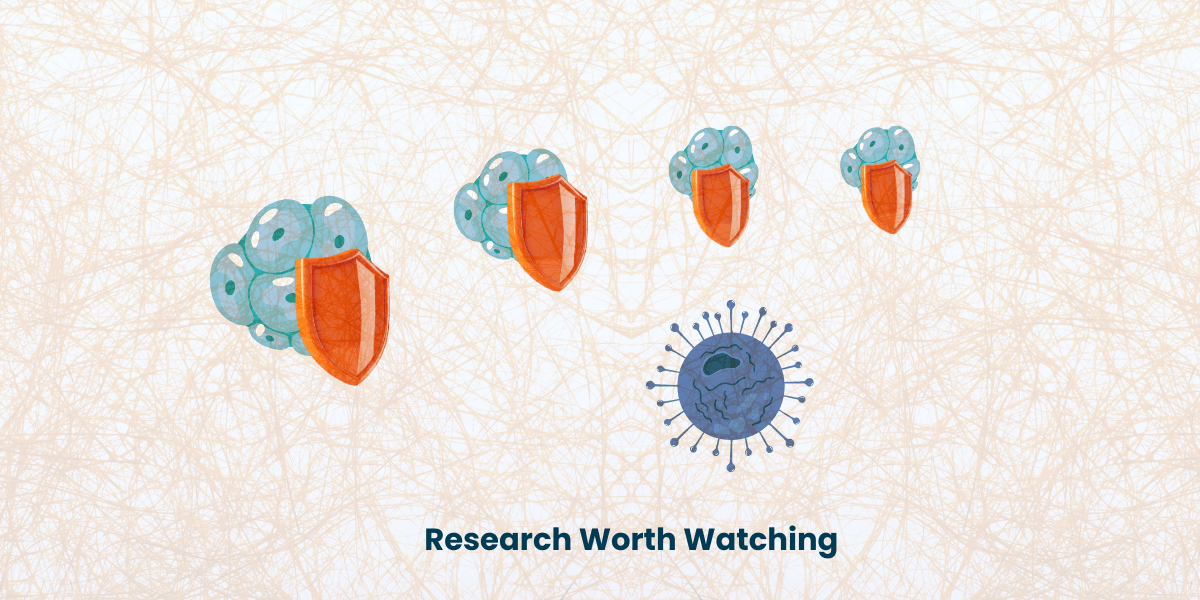
Glioblastoma is the most common and most aggressive primary brain tumor. It’s also one of the hardest to treat. Researchers call it a “cold” tumor. The immune cells that could fight it simply can’t penetrate.
That may be changing.
A New Approach
A team led by investigators at Dana-Farber Cancer Institute and Mass General Brigham has found a way to turn a cold tumor hot.
They used an oncolytic virus, a genetically modified virus designed to infect and destroy cancer cells while leaving healthy tissue alone. This particular virus is based on herpes simplex and engineered to replicate only in glioblastoma cells.
Here’s how it works: The virus infects a tumor cell, kills it, makes a copy of itself, and spreads to the next tumor cell. It also triggers an immune response, alerting the immune system that there’s a problem, so T cells rush in to help.
In other words, the virus acts like an alarm system, waking up the body’s defenses and pointing them directly at the cancer.
The Results
In a phase 1 clinical trial of 41 patients with recurrent glioblastoma, a single injection of the oncolytic virus extended survival compared to historically reported outcomes. The treatment induced long-term infiltration of immune T cells into patients’ tumors, and the closer those T cells got to the dying cancer cells, the longer patients survived.
“We show that increased infiltration of T cells that are attacking tumor cells translates into a therapeutic benefit for patients with glioblastoma,” said co-senior author E. Antonio Chiocca, MD, PhD, Executive Director of the Center for Tumors of the Nervous System at Mass General Brigham Cancer Institute.
“Our findings could have important implications for a cancer whose standard of care hasn’t changed for 20 years.”
What’s Next
The research team has already begun planning a follow-up clinical trial. The goal is to add a therapeutic antibody to the regimen to further enhance the immune response initiated by the virus.
Why This Matters to IronMatt Families
For families facing a glioblastoma diagnosis, this is good news. Hopefully, it will give families more time, better options, and a brighter future.
This is why IronMatt invests in pediatric brain tumor research. Every discovery that moves the field forward brings us closer to treatments that are safer, smarter, and more effective for families facing a pediatric brain tumor diagnosis.
Progress is happening. And we’re not stopping until every child has a fighting chance.
👉 Support life-changing research by donating today.
Learn more:
- Dana-Farber News Release: Virus-Based Therapy Boosts Anti-Cancer Immune Responses to Brain Cancer
- Published study: Meylan M et al. “Persistent T cell activation and cytotoxicity against glioblastoma following single oncolytic virus treatment in a clinical trial.” Cell, 2026. DOI: 10.1016/j.cell.2025.12.055